
Tiny Text Generator
This generator focuses purely on the smallest practical text size Unicode supports, using superscript characters and tightly-spaced small caps.
It's a close sibling of the small text generator page — try both and compare which reads better for your specific use.
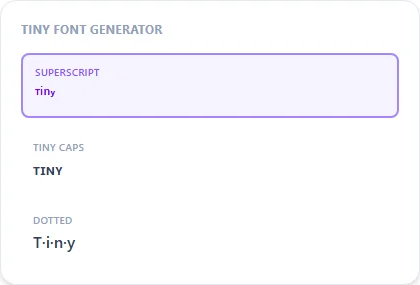
Superscript9 characters
ᵀⁱⁿʸ ᵀᵉˣᵗ
Tiny Caps9 characters
ᴛɪɴʏ ᴛᴇxᴛ
Dotted17 characters
T·i·n·y· ·T·e·x·t
How It Works
Type your text, tap Copy on the style you like, then paste it anywhere — it's plain Unicode text, so it works everywhere. See the full walkthrough with screenshots.
How tiny text is actually built
There's no single Unicode block dedicated to 'tiny' letters, so this generator combines two techniques: superscript characters (raised and reduced, originally meant for footnote markers and exponents) and tightly-tracked small caps. Neither was designed for this exact look, but together they produce the smallest legible plain-text result available without an image or custom font.
Tiny text vs. small font — which to pick
The two pages overlap heavily today. If you want the absolute smallest look for a novelty caption, start here; if you want something that still reads comfortably as a subtitle line, the small text generator's small-caps-leaning options may suit you slightly better.
Frequently Asked Questions
What's the difference between this and the small text generator?
+
They're near-identical in output today, both lean on superscript and small caps, but are kept as separate pages because people search 'small' and 'tiny' with slightly different intent and expectations.
Why are some letters missing from the tiny style?
+
Superscript Unicode doesn't define every letter (like q); those fall back to normal size rather than displaying an incorrect glyph.
Is tiny text good for a bio, or just a caption?
+
Either works, but keep it short. Tiny text is hard to read in long stretches, so it's best for a single line or a quiet aside rather than a full paragraph.
Does tiny text support punctuation?
+
Common punctuation marks pass through in their normal size since superscript Unicode doesn't define small versions of most symbols — only letters and digits shrink.